Excavator selection
Choose the excavator around the job, not a model list
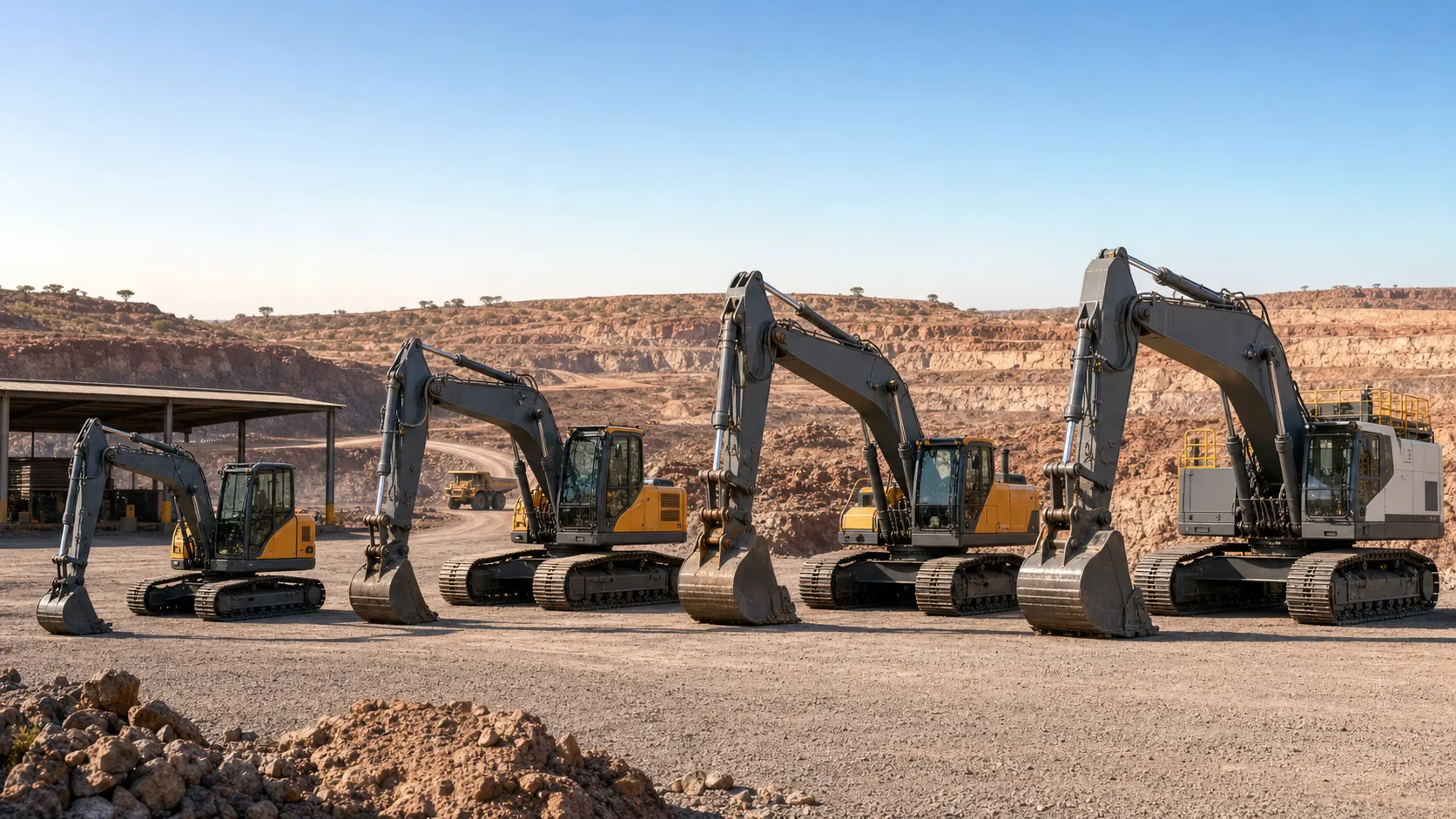
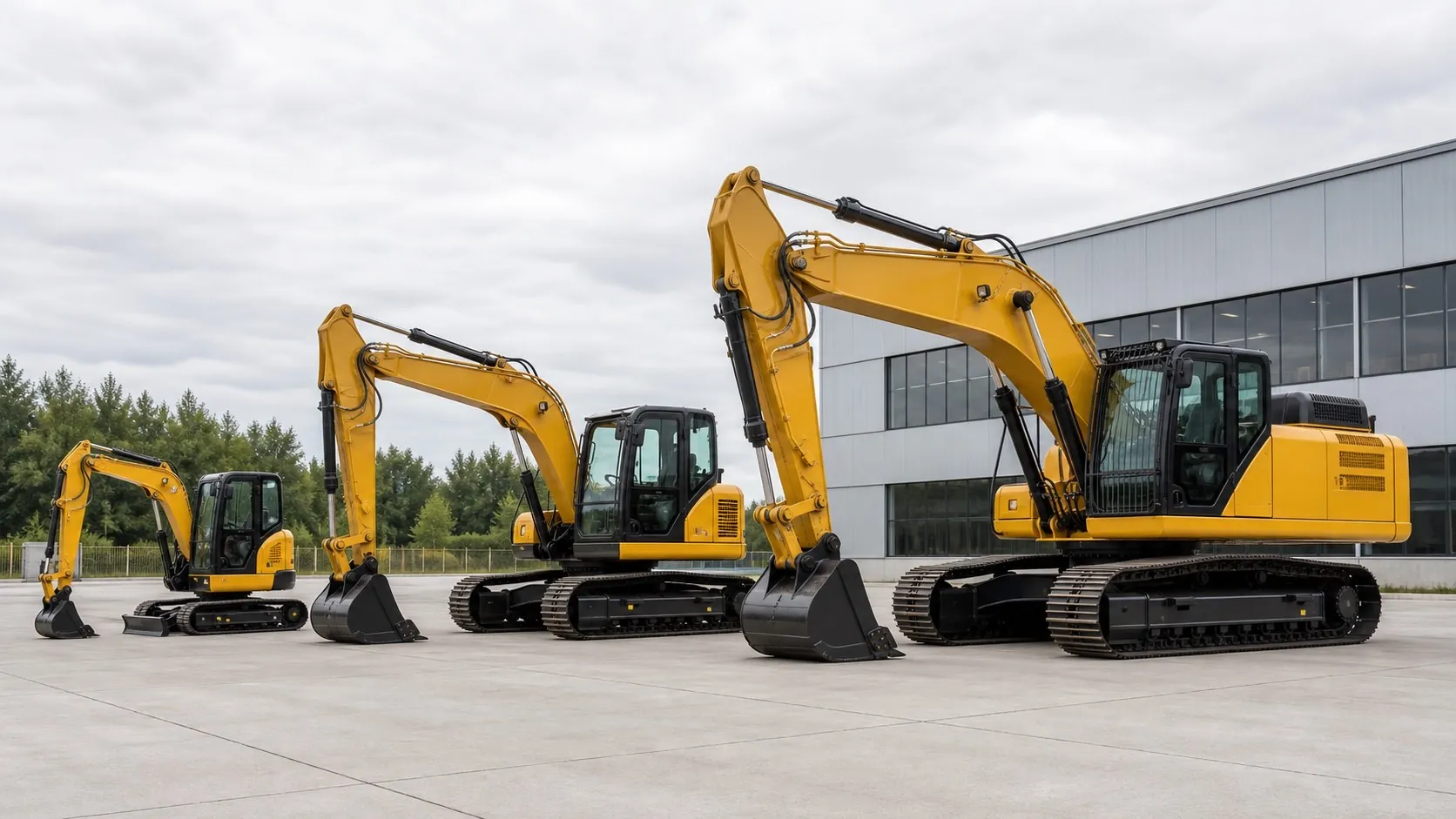
A useful comparison starts with the work cycle and site limits. The same operating-weight class can deliver very different results when material, reach, attachment duty, undercarriage or transport conditions change.
- 01Operating class and daily output
- State the expected tonnes or cubic metres per hour, working hours and utilization. This separates compact utility work, general earthmoving and high-production loading before a model is discussed.
- 02Material and bucket duty
- Describe soil, clay, aggregate, blasted rock or ore, including density, lump size and abrasiveness. Bucket type, capacity, teeth and wear protection must suit the real material.
- 03Digging and loading geometry
- Provide trench depth, bench height, dumping height, working radius, swing angle and available platform width. Boom and arm selection should follow this geometry.
- 04Attachments and hydraulic demand
- List bucket, breaker, ripper, coupler, grab or other tools. Confirm required hydraulic flow, pressure, return line and control arrangement for the exact carrier.
- 05Ground, stability and undercarriage
- Record bearing capacity, slope, travel distance, sharp rock and access width. Track width, shoe type, guarding, counterweight and ground pressure affect safety and wear.
- 06Condition and transport limits
- For used units request serial-linked evidence. For every machine confirm overall and dismantled dimensions, piece weights, inland route, port handling and destination requirements.