
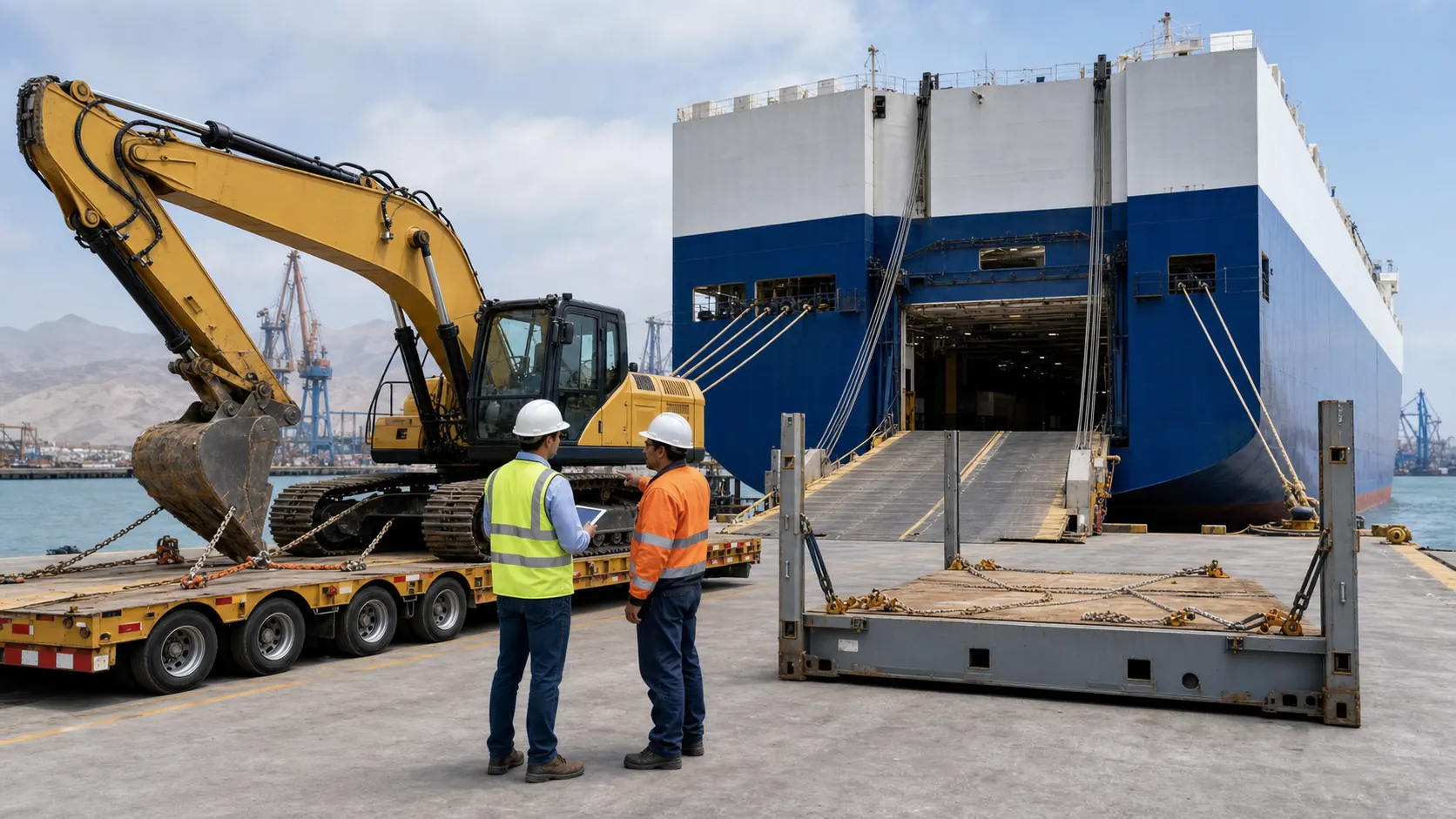
Machinery Shipping Guide · Excavators

Resources

Machinery Shipping Guide

Plan excavator and heavy-equipment shipping by container, flat rack, RoRo or breakbulk. Check dimensions, dismantling, lashing, documents and destination delivery.

Resources

Machinery Shipping Guide

Plan excavator and heavy-equipment shipping by container, flat rack, RoRo or breakbulk. Check dimensions, dismantling, lashing, documents and destination delivery.

Compare machinery transport methods

MethodUsually suitable forConfirm before booking
ContainerMachines that fit after agreed dismantlingDimensions, dismantling, blocking and lashing
Flat rackOversized equipment within route limitsOut-of-gauge dimensions, weight and securing
Ro-roMobile equipment on supported routesPort service, running condition and terminal rules
Bulk vesselLarge or heavy project cargoLifting points, port handling and voyage schedule
Truck / railLand routes or inland deliveryPermits, dimensions, borders and unloading access

The final method depends on the exact machine, route, port and destination-country requirements.

Shipping brief

Information required before comparing freight methods

A freight indication based only on a model name is not reliable. Confirm the transport envelope and route before asking a carrier to price the movement.

01Machine identity and quantity
Provide the exact model or serial-linked unit, number of machines, new or used condition and whether attachments travel with the carrier.
02Overall transport dimensions
Record verified length, width, height and gross weight in transport condition, not only nominal brochure dimensions.
03Dismantled pieces and weights
List boom, arm, bucket, counterweight, cab, tracks or other removed parts with dimensions, weights and marked lifting points.
04Origin and loading access
State the yard or factory location, crane and trailer access, loading equipment, nearest practical port and any road-permit constraints.
05Destination and receiving plan
Provide destination port or inland site, consignee capability, customs responsibility, unloading equipment, route restrictions and required arrival window.
06Commercial scope
Confirm Incoterm, insurance requirement, origin charges, ocean freight, destination charges, clearance, taxes, inland delivery and unloading as separate lines.

Preparation

How machinery is prepared for international transport

The physical machine, booking data, securing plan and document set must describe the same shipment.

01

Measure and choose the route

Verify the transport condition, compare carrier and port limits, and choose container, flat rack, RoRo or breakbulk only after route feasibility is checked.

02

Agree dismantling and protection

Define removed components, capped hydraulic lines, protected glass and openings, loose-part packing, cleaning and any battery or fuel requirements.

03

Approve lifting and securing

Use accepted lifting points, blocking, lashing and weight distribution. The final plan must comply with the selected carrier and terminal instructions.

04

Close the document set

Align commercial invoice, packing list, machine identity, transport drawings, booking details, bill of lading instructions and destination documents before release.

Quotation scope

Read the freight quotation line by line

Two prices are comparable only when they include the same route, cargo condition, handling and destination responsibilities.

Included at origin

  • Pickup or delivery to port
  • Dismantling and packing
  • Crane and terminal handling
  • Export documentation

Ocean transport basis

  • Carrier and service route
  • Equipment type or vessel method
  • Freight and surcharge validity
  • Transit and transshipment assumptions

Destination responsibility

  • Terminal and documentation charges
  • Customs clearance and taxes
  • Inland permits and delivery
  • Unloading and reassembly

Resources

Authoritative references

These primary sources support the inspection or shipping framework. The exact machine manual, sales contract, carrier instructions and destination rules remain controlling.

FAQ

Buyer questions

Which shipping method is normally used for an excavator?

It depends on the machine's verified dimensions, weight, running condition, route and port services. Smaller machines may fit a container after agreed dismantling; larger units may require flat rack, RoRo or breakbulk transport.

What information is required before requesting a freight quotation?

Provide the exact machine, quantity, overall and dismantled dimensions, gross and piece weights, loading location, destination port or inland site, preferred timing and any special lifting or handling limits.

Who confirms blocking, lashing and lifting arrangements?

The final arrangement must be accepted by the selected carrier, terminal and competent cargo-securing parties. Machine manuals, lifting points, transport drawings and the booking conditions remain controlling.

Does the shipping quotation include destination charges and import clearance?

Only when those items are expressly listed. Confirm the Incoterm, origin handling, ocean freight, destination terminal charges, customs responsibility, inland delivery, unloading and taxes as separate scope lines.

Email WhatsApp